

Jessie Moore has been writing professionally for nearly two decades; for the past seven years, she's focused on writing, ghostwriting, and editing in the finance space. She is a Today Show and Publisher's Weekly-featured author who has written or ghostwritten 10+ books on a wide variety of topics, ranging from day trading to unicorns to plant care.
Having spent several years writing about and living in the finance world, I’ve explored a lot of newsletters — I have a good understanding of what’s worth my (and your) time and what’s not. So is Eric Fry legit? Yes. Should you spend money on Fry’s Investment Report? That’s what we’re here to help you decide.
Below, we’ll take a look at the expertise of Eric Fry and his track record. Who is Eric Fry? What’s in the newsletter, and how do the picks perform? And a lot more. Let’s get going…
Is Eric Fry Legit? Key Takeaways:
Yes, Eric Fry is legit. Fry’s report is a solid choice if you’re a growth-oriented investor with healthy risk tolerance and an interest in technology stocks. Here’s what I like about Fry’s Investment Report:
- Proven Track Record: Fry has a 20+ year track record of identifying profitable investment opportunities.
- Project Omega and AI Focus: Project Omega, tied to AI advancements and Elon Musk’s companies, showcases Fry’s forward-thinking approach and ability to spot transformative trends early, especially in the tech space.
- Educational and Comprehensive: Fry’s Investment Report isn’t just recommendations. It includes in-depth market analysis, educational content, and special reports.
- Subscriber Satisfaction: The report has garnered positive feedback from subscribers for its actionable insights, robust research, and a money-back guarantee (365 days on some promotions, 90 days on others — check the specific offer you’re subscribing through).
A more affordable alternative…
With a Zen Investor subscription, you can save precious research time and let a 40+ year market veteran do the heavy lifting for you. Here’s what you get:
✅ Portfolio of up to 30 of the best stocks for the long haul, hand-selected by Steve Reitmeister, former editor-in-chief of Zacks.com with a 4-step process using WallStreetZen tools
✅ Monthly Commentary & Portfolio Updates
✅ Sell Alerts if the thesis changes
✅ Members Only Webinars
✅ 24/7 access to all the elements noted above
✅ Access to an archive of past trades and commentary.
What is Fry’s Investment Report?
Published by InvestorPlace Media and led by Eric Fry, Fry’s Investment Report is a comprehensive financial newsletter that’s been around at least since 2020. It’s designed to provide subscribers with strategic insights into global market trends and emerging investment opportunities.

The report emphasizes macroeconomic analysis and sector-specific trends, offering a blend of traditional stock recommendations and innovative investment ideas. (We’ll explore Eric Fry’s Project Omega below.)
Subscribers gain access to monthly newsletters, a model portfolio, special reports, and an archive of past picks, all aimed at maximizing their investment potential.
In 2026, Fry has leaned heavily into what he calls his “Sell This, Buy That” framework — the idea that in a rapidly shifting market, cutting outdated or overhyped positions is just as important as finding new winners. It’s become the central narrative of the newsletter.
Who is Eric Fry?
Eric Fry is a seasoned financial analyst and portfolio manager with nearly three decades of experience in international equities and macroeconomic strategies.

Eric Fry is best known for his ability to identify significant market trends before they become mainstream. He’s built a reputation for making profitable investment calls.
Fry’s notable achievements include winning the Portfolios with Purpose competition in 2016, where he outperformed 650 financial professionals with a 12-month return of 150%.
His long-term track record includes successful investments in Asian and Russian stocks during financial crises, as well as early investments in commodities and electric vehicle-related stocks.
In short — you won’t find many Eric Fry reviews that criticize a lack of experience.
Eric Fry Project Omega
Eric Fry’s Project Omega: What is it?
Project Omega is the cornerstone of Fry’s investment strategy. It focuses on the potential of artificial intelligence (AI) and its transformative impact on various industries. The project is closely tied to advancements in AI technology and leverages the reputation of influential figures like Elon Musk to highlight its significance.
Eric Fry’s Project Omega aims to identify and invest in companies that are at the forefront of the AI revolution, offering substantial growth potential.
The strategy is designed to capitalize on the rapidly evolving tech landscape and provide investors with opportunities for significant returns.
In short, Project Omega aims to uncover tomorrow’s AI leaders today. It’s not just an investment strategy, but a way to get in on the ground floor before entire business sectors adapt.
Elon Musk, the renowned tech mogul and founder of companies like Tesla and SpaceX, plays a pivotal role in the Eric Fry Project Omega strategy. Musk’s ventures are seen as prime examples of organizations driving innovation in the AI industry.
Eric Fry’s strategy capitalizes on these opportunities by focusing on firms that parallel the innovative drive seen in Musk’s ventures, positioning investors to benefit from the next wave of AI advancements.
Overall, Project Omega illustrates how Fry’s report can be an especially good fit for investors heavily interested in AI, technology, and disruption.
Project Omega in 2026: What’s Changed
Fry has evolved beyond the original Project Omega framing. His current AI thesis — which he’s been laying out through his daily InvestorPlace Smart Money column — breaks every stock into four categories:
- Builders — companies creating AI hardware and software (think chipmakers, cloud platforms).
- Enablers — suppliers of the physical materials, energy, and infrastructure AI needs to function.
- Appliers — non-tech companies using AI to boost their profits.
- Survivors — businesses resilient enough to withstand AI disruption.
In early 2026, Fry has been most focused on the Enablers category — arguing that while investors pile into the obvious chipmaker and cloud plays, the overlooked opportunities are in metals (silver, copper), memory chips, and energy infrastructure required to power the AI buildout. He’s also flagged what he calls AI’s “emerging bottlenecks,” noting that the shift toward agentic AI is changing which types of compute hardware (CPUs vs. GPUs) will drive the next phase of growth.
About InvestorPlace — Reviews + Basics
Fry’s Investment Report is offered by InvestorPlace Media — is the outlet legit?
Yes.Founded by Tom Phillips over four decades ago, InvestorPlace serves as a central hub for investment professionals across various sectors. InvestorPlace has a long history of delivering insightful financial news and advice, and there are countless positive InvestorPlace reviews out there.
In addition to publishing newsletters, InvestorPlace also publishes insight pieces from respected hedge fund managers such as Louis Navellier of Navellier & Associates, which has nearly $1 billion in assets under management.
InvestorPlace’s commitment to providing sound market analysis aligns well with Eric Fry’s expertise in international equities and macroeconomic trends. Given the track record and abundance of InvestorPlace reviews, you can rest easy knowing Eric Fry InvestorPlace, and the services they offer are legit.
Eric Fry’s Investment Report: How it Works
Eric Fry’s Investment Report utilizes a 3-step process to optimize your portfolio and capitalize on emerging opportunities:
1. Portfolio Purge
Eric Fry is big on “trimming the fat” or purging your portfolio of outdated or underperforming stocks.
This step helps clear out companies with antiquated business models that are likely to be disrupted by new technological innovations. This is an important strategy for tech investors, as technology changes rapidly, so the sector and individual companies can be disrupted by competitors.
2. The 1,000% Portfolio
The next phase involves building the “1,000% Portfolio,” which includes high-growth “outsider” tech companies.
These firms are characterized by their innovative technologies and efficient business models, positioning them for substantial gains — the types of companies that could benefit from AI and Project Omega, for example.
3. Invest in Radical New Technology
The final step focuses on investing in new, radical technologies that have the potential to revolutionize industries but receive limited mainstream coverage. These investments offer significant upside potential for early adopters.
Fry’s Investment Report: What You Get
As a Fry’s Investment Report subscriber, you get a lot more than stock picks:
- Monthly Newsletter: Delivered after market close on the second Friday of each month, featuring detailed stock recommendations, market commentary, and analysis.
- Model Portfolio: Provides an overview of all open positions, allowing you to engage with investment recommendations without delay.
- Archive of Past Picks: Access to an extensive archive of past stock picks and special reports, which lets you get more insight into Fry’s investment strategies and historical performance.
- Weekly Updates & Trade Alerts: Between monthly issues, Fry sends weekly portfolio updates and trade alerts when market conditions warrant action — including “Sell” calls when positions hit trailing stops or become overvalued.
Fry’s Investment Report: Cost
Here’s where Fry’s Investment Report pricing gets a little messy. The standard list price is $199/year through some offers, but other promotions frame it as $499 for six months.
InvestorPlace runs deals constantly — I’ve seen introductory offers as low as $49 for six months or a full year depending on the promotion.
Fry also offers higher-tier services: The Speculator (more aggressive global megatrend plays) and Eric Fry’s Leverage (options-based strategies). The subscription includes a money-back guarantee, though the guarantee window depends on which offer you subscribe through — I’ve seen both 90-day and 365-day windows advertised on different deals.
My advice: before you subscribe, check the current offer directly on InvestorPlace’s site, read the fine print on renewal rates, and confirm how long your guarantee window actually is.
Fry’s Investment Report: Pros + Cons
Pros | Cons |
|---|---|
|
|
|
|
| |
|
Fry’s Investment Report Reviews: What Are Actual Subscribers Saying?
Let’s take a look at what other people are saying about Fry’s Investment report. I scoured Eric Fry reviews and testimonials to give you a more well-rounded POV from actual subscribers:
Positive Feedback
People who like Fry’s Investment report tend to like the thoroughness of Eric Fry’s market analysis and the practicality of his stock recommendations. One subscriber noted that they appreciated that Fry doesn’t mix his insights with politics, as is the case with other newsletters:

Subscribers also praise Fry’s Investment Report for its ability to break down complex financial concepts into understandable insights — meaning you don’t need a finance degree to understand what he’s saying.
People really love the special reports included with the subscription, which often include high-growth potential stocks in areas like AI, tech innovations, and international markets.
These reports delve into specific sectors and emerging trends, providing detailed analysis and investment opportunities that are often overlooked by other financial newsletter … which is why some multi-year subscribers like Jerry Warshaw find Fry’s newsletter be above average:

Criticisms
Not everyone loves Eric Fry; a lot of the criticism focuses on the speculative nature of certain predictions. For example, Project Omega’s reliance on AI advancements and the association with high-profile figures like Elon Musk are seen by some as leveraging popular trends to attract attention.
Critics argue that while these investments can be lucrative, they also carry higher risk due to their speculative nature.
Some users also feel that the newsletter occasionally relies too heavily on the reputations of well-known personalities such as Elon Musk to validate its predictions. While this can lend credibility, it may also lead to inflated expectations and disappointment if the investments don’t perform as anticipated.
There’s even a post on Reddit comparing Project Omega to Theranos:
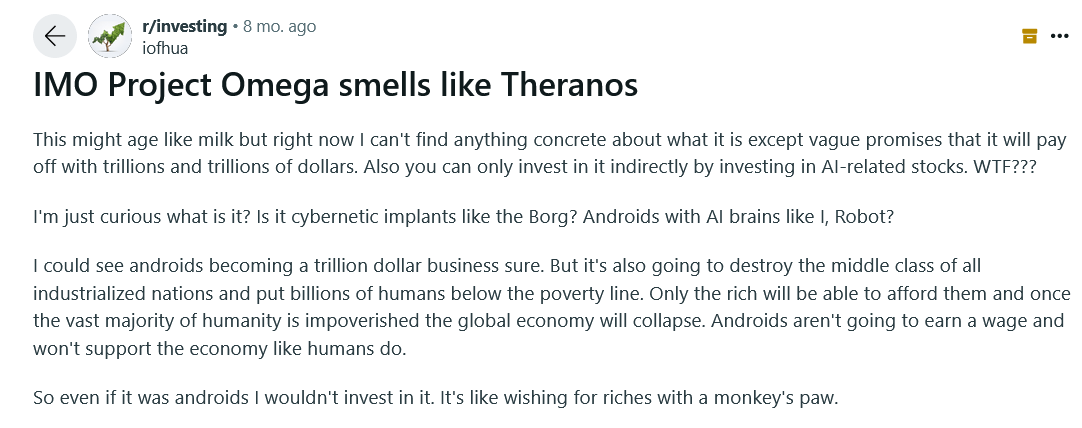
However, many of these comments are hyperbolic and come from people who don’t actually pay for the premium service and research.
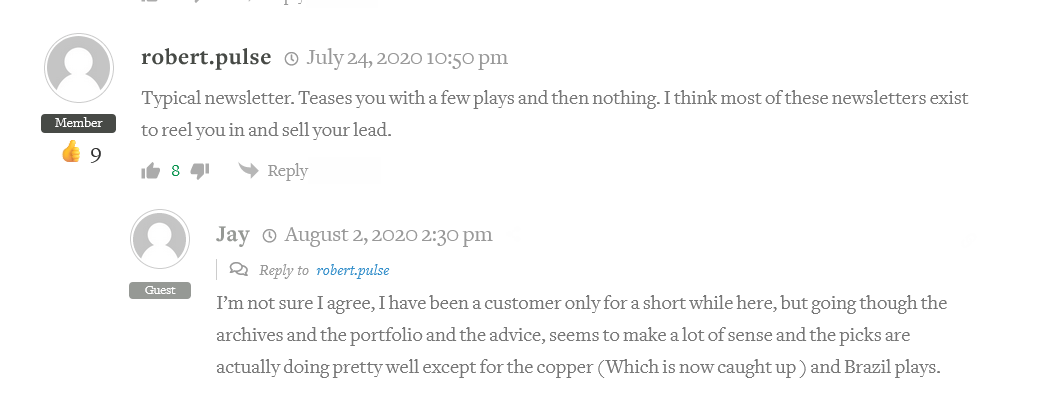
A less hyperbolic criticism is that there have been certain picks or plays that end up not going anywhere. But other commenters disagree:
It’s important to keep in mind that no newsletter will have a 100% success rate with its recommendations. Even the best investors and hedge fund managers are wrong or end up losing money on many of their investments.
So while these are valid criticisms, most of them are to be expected for a stock picking service focused on growth and speculative sectors like tech and AI.
Is Fry’s Investment Report Worth It?
Let’s consider what you get:
- A blend of investing insights
- Deep macro analysis
- Actionable recommendations (in the form of Eric Fry stock picks 2026).
Overall, if it aligns with your risk tolerance, it may be a valuable resource for navigating markets.
One important thing to keep in mind is that the focus on high-growth, outsider tech companies and radical new technologies suggests a high-risk, high-reward investment approach. This might not be suitable for all investors, especially those with a lower risk tolerance.
Emerging technologies can offer high returns, but they also carry significant uncertainty. These investments may be volatile and require a long-term investment horizon.
If the strategy fits your risk-reward profile, Eric Fry’s proven track record and the educational value of the report may make it a worthwhile investment.
How’s Fry’s Portfolio Actually Performing? (2026 Data)
Based on verified member data published by third-party reviewers (as of February 2026), Fry’s model portfolio holds approximately 30 open positions with a roughly 50% average return across all holdings. Here are some standouts:
Notable winners: Westgold Resources (WGXRF) — recommended January 2024 at $1.27, now $5.02 (+314%). Fry issued a “Sell Half” to lock in profits. Freeport-McMoRan (FCX) — the oldest position, recommended January 2020 at $12.90, now at $62.55 (+261%) after selling 2/3 of the position. Brazil ETF (EWZ) — up 64% since April 2025. Japan ETF (EWJ) — up 45% since January 2025.
Notable losers: PayPal (PYPL) — down 39% since July 2023. Mosaic (MOS) — down 38% since November 2022.
No newsletter has a 100% hit rate. But Fry’s approach of riding macro-trend winners internationally while cutting losers has produced strong portfolio-level results — and the fact that he keeps losing positions visible (rather than quietly removing them) says something about transparency.
3 Other Services to Consider
1. Zen Investor
- Cost: $99/year, with multi-year discounts available — $290 for 3 years, $297 for 5 years
- What you get: Stock screeners, analysts insights, detailed investment reports and stock picks
Steve Reitmeister, the brains behind Zen Investor, follows a disciplined and comprehensive method for selecting stocks. His strategy begins by closely tracking top-performing analysts to ensure that only high-quality recommendations make the cut.
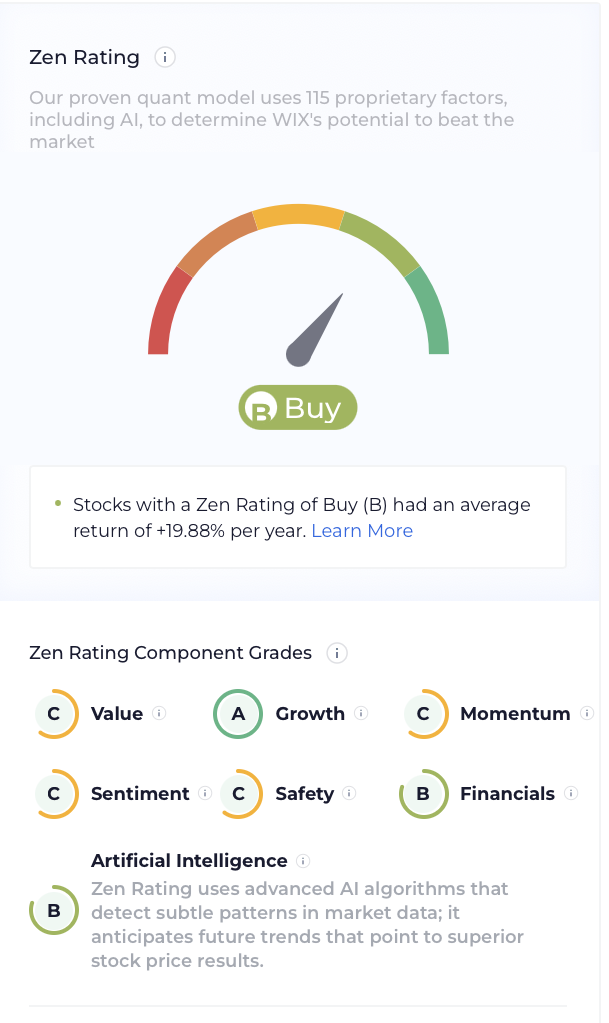
Each potential investment then undergoes a rigorous screening process through the Zen Ratings system, which distills 115 factors that drive growth into an easy-to-read letter score. In addition to an overall score, you can see how each stock scores in different areas, including value, growth, momentum, and more. Stocks rated “A” through the Zen Ratings system have produced an average annual return of +28.50% since 2006.
How does the Zen Rating look? Here’s the Zen Rating for a recent Zen Investor portfolio addition, Wix.com (NASDAQ: WIX):
Once a stock passes this evaluation, Reitmeister digs deeper to assess its growth potential, paying particular attention to companies with strong earnings surprises, attractive valuations, and robust growth prospects.
From this whittled-down selection, he handpicks stocks, relying on over four decades of investment experience to navigate market conditions and identify opportunities that align with his long-term strategy.
Subscribers to Zen Investor gain access to regular market analysis, clear trading strategies, and a focused portfolio of 20-30 high-potential stocks.
2. Seeking Alpha Premium
- Cost: Premium for $299/year ($269 with promotional discount)
- What you get: Expert content, community access, quant ratings, screeners, portfolio checkers, and more
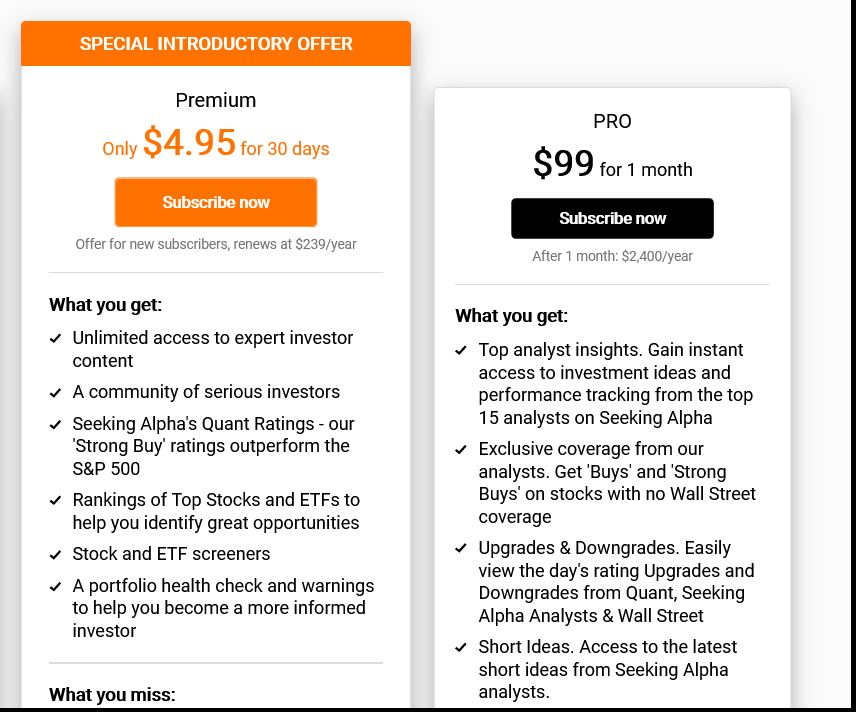
Seeking Alpha’s premium service includes access to exclusive articles, expert analysis, stock recommendations, and a robust community of investors.
Alpha Picks specifically provides curated stock picks, with detailed research and rationale behind each recommendation. This service aims to help investors identify high-potential stocks and make better investment decisions.
It also includes short ideas, which is somewhat unique, as most services are focused exclusively on finding companies with upside potential.
For more, see our review on whether Seeking Alpha is worth it.
3. Motley Fool Rule Stock Advisor
- Cost: $199 annually / $99 for your first year with this link*
- What you get: Stock picks, community support, bonus reports, and more
Motley Fool’s flagship service, Stock Advisor, uses a very specific strategy:
- Buy 25+ companies over time (in an equal-weighted portfolio)
- Hold stocks for 5+ years
- Add new savings regularly
- Hold through market volatility
- Let winners run
- Target long-term returns
We think Stock Advisor is well worth the money if you’re looking for a service with an exceptional, S&P 500-beating track record:
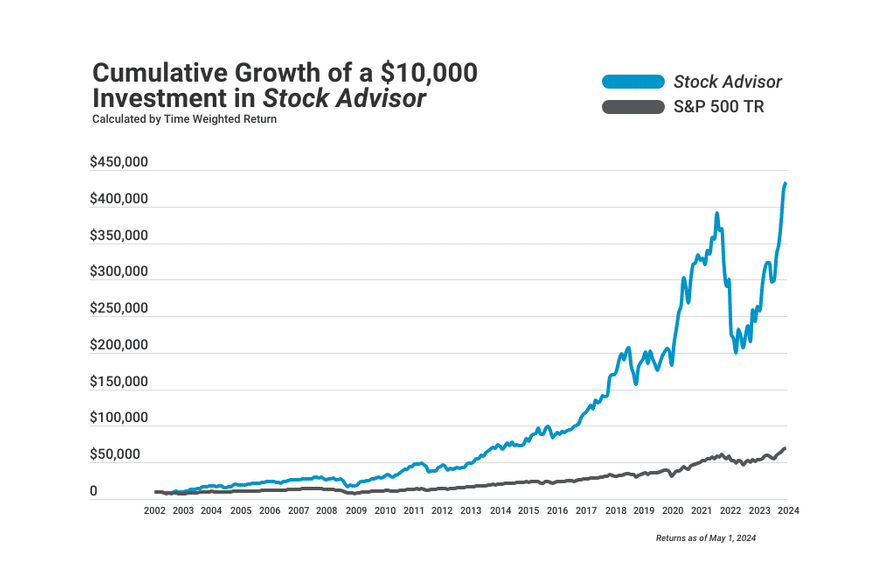
By any measure, The Motley Fool’s services are performing exceptionally well, a testament to the company’s investment philosophy and the quality of its research.
Fry’s Investment Report Vs. The Competition: Which is Right For You?
Newsletter | What You Get | Best For | Cost |
|---|---|---|---|
Monthly newsletter featuring detailed stock recommendations, market commentary, and analysis, model portfolio, archive of past picks | Investors interested in disruptive technology who can stomach market volatility | $199/year | |
An actively managed portfolio of stock picks hand-selected by 4-decade stock market veteran Steve Reitmeister; stock screeners, analysts insights, detailed investment reports and stock picks; monthly webinars | Investors looking for solid investments with long-term growth potential. | $99/year, $290 for 3 years, $297 for 5 years | |
Expert content, community access, quant ratings, screeners, portfolio checkers, and more | Investors looking for detailed commentary and a service with a proven track record | $299/year ($269 with promotional discount) | |
2 stock selections per month, community support, bonus reports, and more | Investors looking for high-potential, long-term picks | $199 year — or just $99* using this link |
Bonus: Pre-Built Strategies to Follow
We had to add one more bonus pick — Zen Strategies. It’s our newest offering, and it only takes 10 minutes a month to manage a potentially market-beating portfolio with it. Here’s what you get with membership:
✅ Backtested Quantitative Portfolios: Zen Strategies selects only the top 7 stocks per strategy, refined from over 115 factors, offering portfolios that span diverse themes — AI Factor, Momentum, Small Caps, Under $10, and more.
✅ Proven Performance: These strategies have delivered exceptional all‑time annual returns:
- AI Factor: +48.01%
- Momentum: +42.17%
- Under $10: +35.02%
✅ Easy to Start: Designed to be implemented in as little as 10 minutes per month, complete with a Quick Start Guide and weekly insights from Editor‑in‑Chief Steve Reitmeister.
✅ Risk‑Protected Access: A 90-day money-back policy and a 100% performance guarantee—if it doesn’t help you beat the market, you get a full refund.
Final Word: Fry’s Investment Report Review
Fry’s Investment Report reviews consistently highlight the service for its detailed analysis, actionable recommendations, and educational value.
Eric Fry’s extensive experience and proven track record lend credibility to the service, while the comprehensive resources provided to subscribers enhance their ability to navigate the financial markets successfully.
But as with any investment service, it’s important to consider your own financial goals and risk tolerance.
Additionally, exploring other services like Zen Investor, Seeking Alpha, and Motley Fool, can provide further insights and options tailored to different investment strategies and needs.
By comparing these services, you can find the one that best aligns with your investment approach and helps you achieve your financial goals.
FAQs:
Who is Eric Fry the investor?
Eric Fry is a financial analyst and portfolio manager with nearly three decades of experience in international equities and macroeconomic analysis. He won the Portfolios with Purpose competition in 2016 with a 150% return, beating 650 financial professionals.
What is Fry's Investment Report?
Fry's Investment Report is a monthly financial newsletter published by InvestorPlace, led by Eric Fry. It provides macro-driven stock recommendations, a model portfolio of ~30 positions, weekly updates, special reports, and an archive of past picks.
What are Eric Fry's stock picks for 2026?
Fry's specific picks are subscriber-exclusive. His 2026 strategy has focused on energy (capitalizing on the Iran conflict), international diversification (Brazil, Japan, Australian gold miners), and AI Enablers — companies supplying the physical infrastructure AI needs, like metals and memory chips.
Is InvestorPlace reliable?
InvestorPlace is a well-respected investment publishing firm with over four decades of experience delivering insightful financial news and advice. It serves as the publisher of Fry’s Investment Report and has a reputation for providing reliable and comprehensive stock market analysis.
How much does Fry's Investment Report cost?
The standard list price ranges from $199–$499 depending on the term. InvestorPlace frequently runs promotions as low as $49 for the first six months or year. The money-back guarantee varies by promotion — the $49 deal typically includes a 365-day window, while other entry points offer 90 days. Always check the specific guarantee period on the offer you're subscribing through.
Is Eric Fry's Project Omega still active?
Fry has evolved beyond the original "Project Omega" branding. In 2026, his AI thesis centers on four categories: Builders, Enablers, Appliers, and Survivors. He's particularly focused on AI Enablers — overlooked companies in metals, energy, and infrastructure rather than the obvious chipmaker plays.
How does Fry's Investment Report compare to Zen Investor?
Fry's report focuses on macro-driven, higher-risk international and tech plays with ~30 positions. Zen Investor takes a more systematic approach, using a 115-factor quantitative model (Zen Ratings) to select 20–30 stocks with a documented track record of 28.50% average annual returns for A-rated stocks since 2006. Zen Investor is $99/year vs. Fry's $199–$499/year standard pricing.
What is Eric Fry's track record?
Fry won the Portfolios with Purpose competition in 2016 (150% return) and claims 41+ recommendations with 1,000%+ gains over his career. As of February 2026, his model portfolio's top performers include Westgold Resources (+314%) and Freeport-McMoRan (+261%), though not every pick wins — PayPal is down 39%.
Where to Invest $1,000 Right Now?
Did you know that stocks rated as "Buy" by the Top Analysts in WallStreetZen's database beat the S&P500 by 98.4% last year?
Our August report reveals the 3 "Strong Buy" stocks that market-beating analysts predict will outperform over the next year.