

The President’s HUGE Intel Bet: 3 Chip Stocks With Bigger Upside
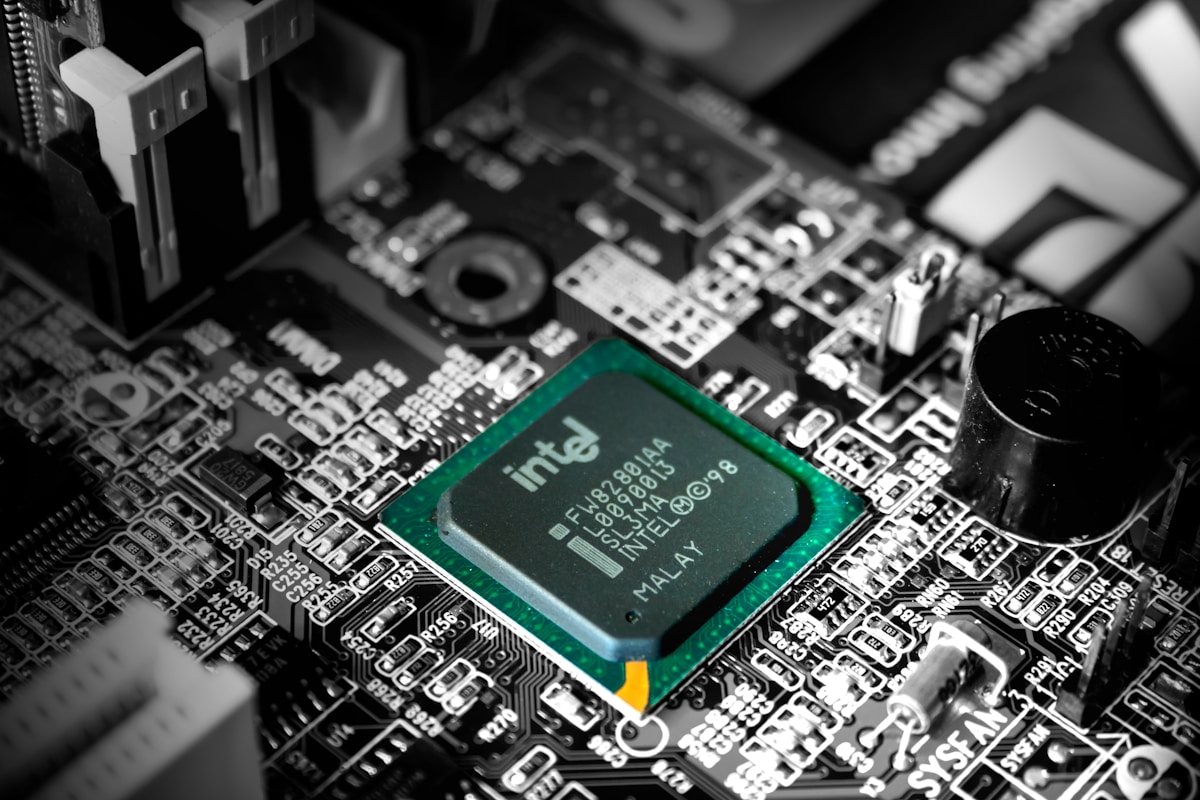
The President of the United States just publicly promoted a stock: Intel. He said it's made billions for America.
And he's not wrong. Intel is finally showing signs of life. But here's the thing: Intel isn't the biggest winner from what's happening in American chips right now. Not even close.
A note from our sponsors...
Trump Just Changed 401(k) Rules Forever
Your 401(k) may be about to change in a way most Americans haven't heard about.
President Trump's Executive Order #14330 is pushing a major shift in how retirement plans can invest – and it has now reached the Department of Labor for approval.
Get the full story and see how your retirement could be impacted.
The government has committed $52 billion to bringing chip manufacturing back to the U.S., and that money is still flowing. There's a handful of American chipmakers positioned to catch it, and one of them has Wall Street analysts calling for the stock to double from here.
So here's where Intel actually stands, what it's costing you to buy in at these levels, and the pick we're saving for last with that 100% upside case.
P.S. Prefer to watch these stock picks in video form? Get them here.
Intel (INTC)
Let's be clear about something: Intel's (INTC) turnaround is real.
This isn't a meme stock riding a headline. Last quarter's sales rose about 25%, the biggest jump the company has posted in more than 15 years.
The data center business is growing again. The foundry is landing customers.
The CEO put $10 million of his own money into the stock last month. That's conviction.
But here's the problem. Everything above, the market already knows. And it's already paid for it.
As of this writing, Intel is up more than 4x over the past year. And over the last 3 months? It's actually down about 5%. The rally has stalled, because the price has run way ahead of the business.
Look at what you're actually buying. On paper, Intel lost more than $11 billion over the last 12 months. Now, most of that is an accounting quirk. Intel holds a block of shares in escrow for the government, and the better the stock performs, the bigger the paper loss it has to book. So set that aside and look at the real business. Intel earned about 40 cents a share last quarter. Annualize that, and at today's price you're paying roughly 60 times earnings. You're also paying more than 11 times sales. Compare that to the semiconductor names below, and Intel is by far the most expensive stock on this list for what you get. That's not a value stock. That's a hope stock.
And Wall Street sees it. 29 analysts cover Intel. 18 of them, more than 60%, say Hold. Only 9 say Buy or Strong Buy. And the average price target isn't even 5% above where the stock trades right now. After a 4x move, the Street thinks the upside from here is less than 5%.
Our Zen Ratings tell a related story, with more precision. This is our proprietary quant system that evaluates 115 fundamental, technical, and AI factors and distills them into an easy-to-understand letter grade, A through F. A-rated stocks have historically beaten the S&P by nearly 3 to 1.
Intel earns a Zen Rating of B, a Buy, ranking in the top 20% of the roughly 4,600 stocks we cover. That's a real step up from where this stock used to sit, and it's driven mostly by sentiment: Intel's Sentiment grade is now an A, ranking in the top 2% of every stock we track, so the market has clearly warmed to the turnaround story. Growth is strong too, top 11%, and Momentum sits at top 14%.
But the soft spots are still soft. Financials sit right in the middle of the pack, which for a company that just had its best quarter in 15 years tells you how much repair work is still ahead. Value ranks in the bottom 30%. And Safety sits in the bottom 25%.
So here's the takeaway. Intel is a good company getting better, and the data agrees with that more than it used to. But the easy money's been made, the price is running ahead of the earnings, and the people paid to follow it see almost no upside from here. If you already own it, you know the score. But if you're looking to put new money into American chips, there are 3 names below with better fundamentals, cheaper valuations, and a lot more room to run.
Texas Instruments (TXN)
The first pick is the most boring stock on this list, and that's exactly why we like it.
Texas Instruments (TXN) makes analog chips. Not the flashy AI processors. The chips that manage power, convert signals, and sit inside every car, factory floor, and data center on the planet.
Nobody gets excited about them. But everybody needs them.
And here's what matters for this story: TI owns its own factories. It's been building fabs in Texas and Utah for years. It was already reshored before reshoring was a headline. So when that government money flows, TI doesn't have to go build anything. It's already there.
Now, this is a cyclical business, and it just came through a rough stretch. Earnings shrank for 3 straight years. But the cycle has turned. Over the last 12 months, earnings are up about 20%. Last quarter alone, profits jumped nearly 30% from the quarter before. Profit margin is back above 30%.
And the stock has pulled back more than 10% over the last 3 months. That could be a potential entry point.
Analysts expect earnings to compound at roughly 20% a year for the next 3 years, nearly doubling by 2029.
23 analysts cover TI. 13 of them say Buy or Strong Buy. The average price target sits more than 25% above where the stock trades now. Kevin Cassidy at Rosenblatt, top 1% of analysts we track, is at Strong Buy with about 35% upside. And Tristan Gerra at Baird, ranked in the top 3%, has a target nearly 50% above current levels.
Zen Ratings gives TI a B, a Buy, ranking in the top 17% of all stocks. The component grades tell you exactly what kind of stock this is. Momentum top 15%. Sentiment top 27%, still a positive tilt even if it's not the standout it first looked like. Our AI factor, top 5%, and to be clear, that's not a measure of how much AI a company uses. It's our proprietary algorithm that detects patterns in the data pointing toward outperformance.
And Financials, the standout, top 6% of all stocks. That's a balance sheet that can fund its own buildout without the government.
One risk applies to every stock on this list, not just TI. Semiconductors are cyclical. Demand runs hot, everybody builds capacity, supply catches up, prices fall, and earnings drop. It's happened over and over for decades. And right now, a huge share of chip demand is tied to AI data center spending. If the big tech companies slow that spending, even for a couple of quarters, every name here feels it. That's why we're flagging the Safety grade for each one, and why none of these should be your entire portfolio.
But here's the flip side, and it's why TI is the first pick. When the cycle turns down, the companies that hold up best are the ones with the strongest balance sheets and the most diversified customers. That's TI. Top 6% on Financials. Chips in cars, factories, phones, and data centers, not just one end market. So TI is the safe way to play this. Already reshored, already profitable, earnings turning up, stock on sale. It won't double. But it doesn't need to.
Broadcom (AVGO)
Pick number 2 is the opposite kind of stock. Broadcom (AVGO) is right at the center of the AI boom. It designs the custom chips that the biggest tech companies use to run their AI models, and it makes the networking gear that connects every server in every data center. If Nvidia is the engine, Broadcom is the nervous system.
Broadcom isn't a fab owner like TI. It's a designer. But it's one of the largest American chip companies on the planet, and it's the kind of customer every one of these new U.S. fabs is being built to serve.
Here's what's remarkable. Over the past 12 months, Broadcom's earnings are up more than 125%. Revenue is north of $75 billion. Profit margin is nearly 40%. And the stock, over that same year? Up less than 10%. As of this writing, it's down more than 10% in the past month alone.
Think about that. The business more than doubled its profits, and the stock barely moved. That's the exact opposite of Intel. And it shows up in the valuation. Yes, the P/E is high, close to 60. But the PEG ratio, which is price relative to growth, is right around 1. That's fair value for a company analysts expect to grow earnings more than 50% a year for the next 3 years, versus roughly 33% for the semiconductor industry.
27 analysts cover Broadcom. 23 of them say Buy or Strong Buy. Zero say Sell. The consensus is Strong Buy, and the average target is about 40% above current levels. Atif Malik at Citigroup, top 1% of analysts, reiterated Strong Buy earlier this month with roughly 40% upside. John Vinh at KeyBanc, also top 1%, sees more than 55%. And Mark Lipacis at Evercore, top 2%, is close to 60%.
Zen Ratings gives Broadcom a B, a Buy, ranking in the top 8% of all stocks, even stronger than it looked when this piece was first drafted. Growth ranks in the top 13%, and Financials, again the standout, top 3% of every stock we cover.
And we want to be honest about the weak spot: Safety comes in at a C, bottom 22%. This stock still swings hard.
Broadcom is the high-conviction AI name where the stock has fallen behind the business. Volatile, yes. But when a company doubles its earnings and the price goes sideways, that gap tends to close.
By the way … If you want to stay one step ahead of the market, join our Live training every Monday, where we share our updated market outlook and unveil our Trade of the Week based on our proven Zen Ratings quant model. It's a free event, but you do need to register at wallstreetzen.com/live.
Micron (MU)
And now the one we've been building to. The stock Wall Street thinks could double from here: Micron (MU).
Micron is the only American company that makes memory chips. And memory has become the bottleneck of the entire AI buildout. Every AI processor Nvidia and Broadcom sell needs high-bandwidth memory stacked right next to it, and there are only 3 companies on Earth that make it. One of them is in Boise, Idaho.
Micron is the purest reshoring play on this list. It broke ground on a mega-fab in New York earlier this year, and its Idaho expansion is expected to start producing next year. Both are backed by one of the largest CHIPS Act awards ever granted.
Here's where it gets wild. Over the past 12 months, Micron's earnings are up roughly 700%. Not a typo. About $50 billion in profit on $90 billion in revenue. That's a profit margin north of 55%. And the stock is up roughly 7x over the past year.
So you'd think it's expensive. It isn't. The P/E is about 22. The PEG ratio is around 0.5, half of what you'd pay for a fairly valued growth stock. Earnings grew faster than the share price. Again, the opposite of Intel.
And analysts think it keeps going. Earnings are forecast to grow more than 40% a year for the next 3 years. That's more than triple from here.
26 analysts cover Micron. 24 say Buy or Strong Buy. Zero Sells. The average target is about 40% above current levels. But look at the top end. C.J. Muse at Cantor Fitzgerald and Tom O'Malley at Barclays, both ranked in the top 1% of all analysts, have targets roughly 100% above where the stock trades today. John Vinh at KeyBanc, top 1%, is at 75%.
Micron carries a Zen Rating of A, a Strong Buy, ranking in the top 1% of the roughly 4,400 stocks we cover.
Here's the full picture. Sentiment is a B, top 6%. Value is a B, top 7%. Momentum is a B, top 5%. And Growth and Financials are both A's, both in the top 2% of all stocks. Safety is a D, bottom 8%. Memory is the most cyclical corner of the chip business, and this stock will get hit hard when the cycle turns.
So that's the whole picture. Micron is the most volatile name on this list. But it's also the cheapest on valuation, the fastest growing, and the one with the most reshoring money behind it. The President is talking about Intel. Wall Street is talking about Micron.
Wrap
So let's bring this home.
A presidential endorsement moves a stock for a day. Industrial policy moves an industry for years. And the money from that policy doesn't stop at the name in the headline. It flows to every company building the factories, supplying the parts, and filling the capacity.
Intel is the headline. It's a real turnaround, and if you own it, hold it. But the price already reflects the good news.
Don't chase the name in the news. Buy the names the money is actually flowing to.
What to Do Next?
Want to get in touch? Email us at news@wallstreetzen.com.
Keep Reading
See All News


Company
AboutNewsBlogStock Investing FAQPlansPrivacy PolicyTerms of ServiceCancellation & RefundsPerformanceHelp GuidesContactTwitterYouTubeNewsletterInformation is provided 'as-is' and solely for informational purposes and is not advice. WallStreetZen does not bear any responsibility for any losses or damage that may occur as a result of reliance on this data.