

2 Stocks Michael Burry is Buying Instead of NVDA
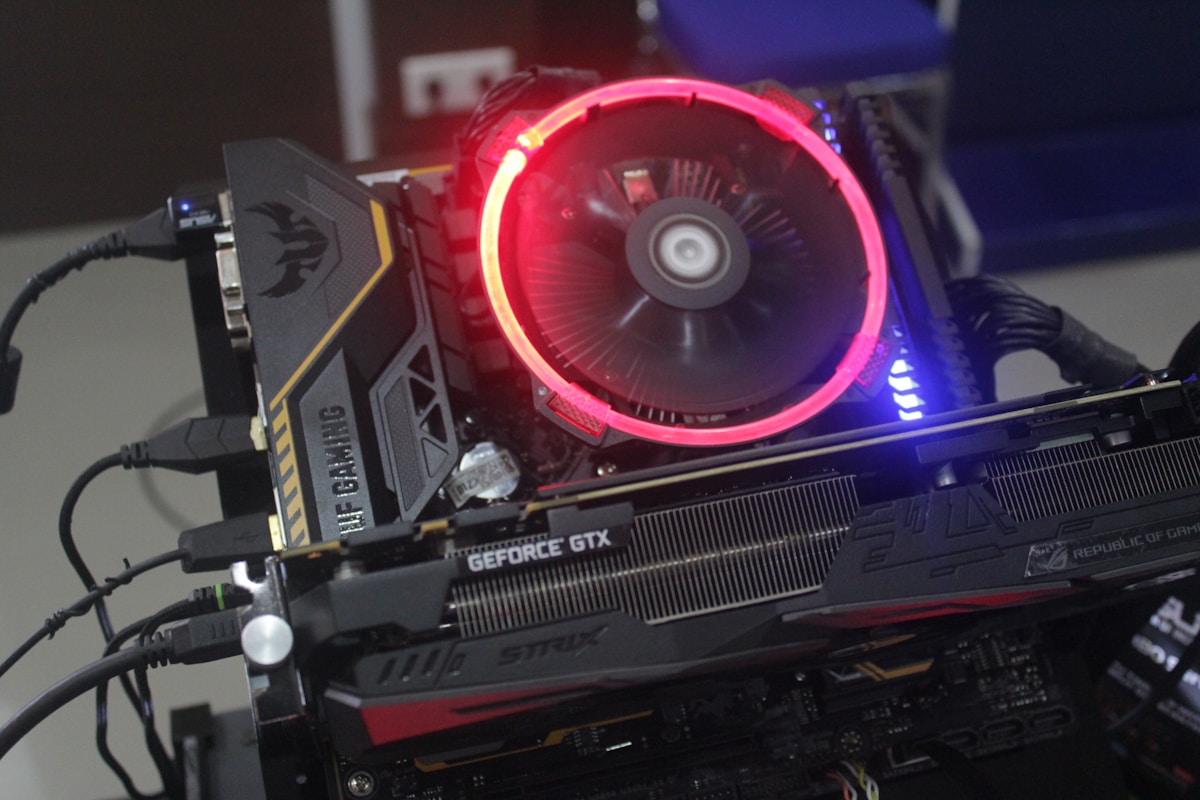
Nvidia (NVDA) has just lived through a stretch for the history books. The stock slid more than 30% from its October record high, CEO Jensen Huang resigned amid a scandal, and less than two weeks later the board brought him back. Through all of it, the man who called the 2008 housing crash and inspired the movie "The Big Short" still won't buy Nvidia for the long haul.
A note from our sponsors...
America's Economist Explains This Stock Market in Three Words
Something strange is happening in the stock market. Dr. Mark Skousen, the economist who called the '95 tech boom and the 2009 bottom, has boiled it down to three words. And if he's right, what happens next could make or break your retirement.
Watch the one move he says to make now – free, right here.
Instead, Michael Burry has put more than 20% of his entire portfolio into just 2 stocks. And here's the part that should stop you cold. Neither one is a chip company. Neither one has a thing to do with the AI trade everyone else is piling into.
Burry thinks this market looks like the dot-com bubble all over again. Which raises the real question. What is he seeing that the rest of Wall Street is missing?
Today we're going to reveal both of his big bets. But just because a prominent investor buys a stock doesn't mean you should follow him blindly. So we'll also dissect which opportunities look most promising right now and why.
Note: Prefer to watch this breakdown on YouTube? Check out our video here.
Burry's 2 Big Bets
His 2 largest positions right now, each more than 10% of his portfolio, are a matched pair. And once you see the pattern, you can't unsee it.
The first is MercadoLibre (MELI). Think the Amazon of Latin America, except it's also the PayPal of Latin America, because its Mercado Pago arm is a giant fintech business bolted onto the online store. Burry bought in the $1,600s after a brutal 1-day drop, then added twice more under $1,500. And he's said if it falls another 20%, he'll buy even more.
His second bet flies way under the radar for US investors. It's an Australian company called Temple & Webster, the online furniture retailer of Australia, and one of his beloved "BETS." His read is simple. He says the shares "made a high volume bottom, and has made a turn."
So what do these 2 have in common? They're both beaten-down online retailers that dominate their home regions. One rules Latin America. One rules Australia. Both got punished. And Burry is betting the market comes around.
He made some smaller moves too. He added to Adobe, picked up more of the Chinese e-commerce giant JD.com, and bought long-dated call options on the grocery chain Sprouts. But MercadoLibre and Temple & Webster are the headliners. Those are the 2 main bets.
MercadoLibre (MELI)
So let's run Burry's own bets through our own quant model, starting with MercadoLibre, the one he's buying hand over fist. Because this is where blindly copying a famous investor can get you in trouble.
If you're new here, a quick explainer. Our Zen Ratings quant model boils 115 proprietary factors across fundamentals, technicals and AI into one intuitive letter grade, A through F, where A is a Strong Buy, B a Buy, C a Hold, and D or F a Sell. Underneath it sit 7 Component Grades, including Value, Growth, Momentum, Sentiment and Safety, that show you exactly where a company is strong and where it's weak.
So let's pop the hood on MercadoLibre. And right away, our model is hitting the brakes. It rates MercadoLibre a C, equivalent to a Hold recommendation. Hold-rated stocks have historically underperformed the market on average.
But the bull case is real, so let's be fair to it. This is a dominant business, the top shopping platform across Latin America, with a fintech arm turning it into the digital bank of a continent.
But here's the bad news. On November 4, it missed Wall Street's earnings estimate, with earnings per share growing only about 6% from a year ago even as revenue jumped 45% to $10.75 billion. Operating margin fell to 6.3% from 9.8% a year earlier as the company spent heavily on free shipping, fulfillment centers and affiliate marketing, and the stock dropped more than 10% in the days that followed. For a company priced for big things, a miss like that stings, and it points straight to the problem.
Despite this, Wall Street still loves the stock. It has a consensus Strong Buy recommendation among the analysts we track, but look at what's happening with the most up-to-date coverage, which includes price target cuts since the report. Our own page even spells out the disagreement in black and white. The analysts say Strong Buy. Our Zen Ratings model says Hold.
Why the gap? MercadoLibre gets that C rating because its overall fundamentals rank in the bottom 25% of the market. Look at the underlying Component Grades to see why. The soft spots are exactly where it counts right now. Sentiment and Safety both grade D, landing in the bottom 16% of the market, the model's way of saying the Smart Money is backing away while the company spends aggressively to grab the future. Momentum is weak too, in the bottom 23%, so shares haven't found their footing. And MercadoLibre ranks just number 21 out of 28 in the Internet Retail group.
So here's where we land. MercadoLibre is a watch, not a buy, today. What flips it? Margins that stop shrinking, and our Sentiment grade turning up, the sign the Smart Money is coming back. Burry can sit through years of margin pain. For most of us, there's no prize for being early. Put it on the watchlist and let the grades tell you when it's time, because the next stock gives you the same thesis with far better data behind it.
Wayfair (W)
Here's the thing about Burry's other investment, Temple & Webster. It trades over in Australia, not on the U.S. exchanges. So it sits outside our model's universe, and almost nobody reading this can easily buy it anyway. So we went looking for the US version of Burry's exact bet. And we found it. Our first pick is Wayfair (W).
Wayfair runs the same playbook as Burry's Australian name. It's the online furniture and home-goods giant, except it's listed right here in the US and you can buy it in about 10 seconds. Same business, same beaten-down-leader DNA. And the recent results back it up. On November 4, Wayfair beat Wall Street's earnings estimate again, with adjusted earnings per share up about 33% year over year to $0.93. Revenue rose 9.7% to $3.42 billion, U.S. revenue grew more than 11% against a roughly flat home furnishings market, and the company swung back to a GAAP profit. For a stock everyone wrote off as a pandemic one-hit-wonder, that is a genuine turnaround taking shape.
And the analysts are pounding the table. 21 cover shares, and 14 of them give Wayfair a Buy or Strong Buy recommendation. The most bullish of the bunch is Michael Lasser of UBS, who ranks in the top 3% of all analysts we track, and his fair value target sits well above where shares trade. When a top-3% analyst is calling for that kind of upside, Wall Street believes this turnaround has room to run.
Now our data. Wayfair earns an overall B, a Buy recommendation, in the top 15% of all stocks. And here's a number worth sitting with. B-rated stocks like this have historically roughly doubled the market's return, better than 2 to 1. Walk the strong Component Grades with us to see why it ranks so highly. Sentiment lands in the top 16%, the Smart Money moving in. Financial strength, top 7%. And the standout, Growth, in the top 2% of every stock our model tracks, which tends to foreshadow more earnings beats ahead. It also ranks number 5 out of 28 in Internet Retail. Add it all up. A company Wall Street is backing, with the Smart Money arriving and an elite growth engine, and you've got the model flagging a genuine turnaround, not a dead-money value trap.
There are soft spots to know about. Value lands in the bottom 22% of the market, and Safety in the bottom 28%, so this is not a cheap, steady stock. And the one honest knock on the business itself is the international side, which is still shrinking while the US engine roars. But that's a sideshow next to a 33% earnings beat and a top-2% Growth grade. Wayfair hands you Burry's online-furniture thesis in a stock you can actually own, the perfect way to play his bet without flying to Sydney and the Land Down Under.
How Nvidia Rates in Our Model
OK, so now we've given you Burry's picks, or at least an approximation of them. Now we have two more things to offer you.
First, how does Nvidia rate in our quant system? Interestingly, the Zen Ratings disagree with Burry. And here's something worth flagging: since this was drafted, Nvidia's Zen Rating has upgraded from a B to an A, a Strong Buy, in the top 4% of all stocks. Financial strength sits in the top 1%, Value in the top 13%, and Nvidia ranks number 7 out of 64 in the Semiconductor group. The one soft spot is Safety, which grades a D in the bottom 14% of the market.
Yes, the company is overall strong. However, Burry's caution is warranted, as are the subtleties of the current situation. Huang is back, but governance experts have questioned the board's decision, and an SEC probe has been reported. The market doesn't like uncertainty, and that weak Safety grade is the model's way of telling you so. So we'd suggest caution here, even with the A.
But that's not a very optimistic note, is it? So that brings us to the second thing we wanted to share.
We want to close on a more optimistic note with a VERY highly-rated stock that follows Burry's thesis to a T, but may be a better buy opportunity right now. And it just so happens to be rated in the top 4% of every stock in our entire model.
Now for our final asset. If you want to stay one step ahead of the market, join our Live training every Monday, where we share an updated market outlook and trading plan to outperform, plus a Trade of the Week based on our proven Zen Ratings quant model. It's a free event, but you do need to register at wallstreetzen.com/live. And even if you can't join live, it's still worth signing up, since a replay goes out to all registrants to watch whenever is convenient.
ATRenew (RERE)
Here's a stock Burry doesn't own, and it might be the purest version of his whole idea on the board. It's ATRenew (RERE), and it plays the exact same beaten-down-online-retailer game, except our model loves it.
So what does it do? ATRenew runs the largest platform in China for buying and reselling pre-owned electronics, used phones, tablets and gadgets, giving them a second life. It's e-commerce built on the circular economy, and it's cheap, beaten-down, and dominant in its niche. Exactly the profile Burry hunts for.
And the business is on fire. On November 19, ATRenew reported third-quarter revenue up 25.3% to RMB 6.45 billion, about $962 million, with operating income up 57.9% and net income up 53.6%. It also bought back about $6.6 million of its own shares in the quarter, and it guided for fourth-quarter revenue growth of roughly 24% to 26%. Wall Street experts see earnings growing at an exceptional clip in the year ahead, several times faster than the average company, as more of China's used-electronics market moves onto organized platforms like this one.
Now, coverage is thin. Just 1 analyst currently covers shares. But that's the Hidden Gem setup. That lone analyst gives ATRenew a Strong Buy recommendation, with a $5.50 fair value target sitting above today's price, and when a stock has this little coverage, it only takes a few more analysts picking it up to push shares higher. The sell-side simply hasn't caught up to this one yet, which is precisely the window Burry says he lives for.
And the grades back it hard. Here's something worth flagging: since this was drafted, ATRenew's Zen Rating has upgraded from a B to an A, a Strong Buy, in the top 4% of all stocks, and it now ranks number 1 out of 28 in Internet Retail. Walk the strong grades with us. The standout is Sentiment, in the top 2% of every stock we track, the Smart Money already onboard. Value lands in the top 12% and Growth in the top 11%, which for a stock this cheap and this small is the early-discovery setup in a nutshell. Financials come in at the top 42%, which is perfectly fine for a company like this.
There are soft spots worth knowing about. Safety sits in the bottom 25% of the market, and Momentum is only middling, in the top 51%, so shares haven't fully turned the corner yet.
The one real risk is simple. This is a small, lower-priced Chinese company trading here in the U.S., so it can swing harder than a blue chip and carries extra political and regulatory uncertainty, and that comes with the territory for an under-the-radar name. But as of this writing, you've got a dominant, cheap, fast-growing circular-economy play that our model ranks at the very top of e-commerce, and one Burry himself would probably recognize as a "BET." The perfect pick to close out our hunt.
The Takeaway
So let's bring it home. The lesson from Burry today isn't to copy every trade. It's to follow the thesis, not every stock.
If you want to track his thinking directly, keep MercadoLibre and Nvidia on your watchlist, and let the grades and the next earnings reports tell you when to move. If you want Burry's online-furniture bet on a stock you can actually buy, Wayfair gives you that type of turnaround right here in the US. And if you want the highest-rated way to play this whole beaten-down e-commerce theme, ATRenew is sitting at the top of our model for a reason.
Remember, Zen Ratings are updated daily. Check them before any buy, hold, or sell decision, and bookmark wallstreetzen.com.
What to Do Next?
Want to get in touch? Email us at news@wallstreetzen.com.
Keep Reading
See All News




Company
AboutNewsBlogStock Investing FAQPlansPrivacy PolicyTerms of ServiceCancellation & RefundsPerformanceHelp GuidesContactTwitterYouTubeNewsletterInformation is provided 'as-is' and solely for informational purposes and is not advice. WallStreetZen does not bear any responsibility for any losses or damage that may occur as a result of reliance on this data.